Arun HazellOct 08, 20265 min read
Agency Day at Gerolsteiner: Why Creative Agencies and Developers Belong at the Same Table
Description
One day, every agency a client works with in one room. Why creative agencies and technical implementation should work together far earlier than they usually do.
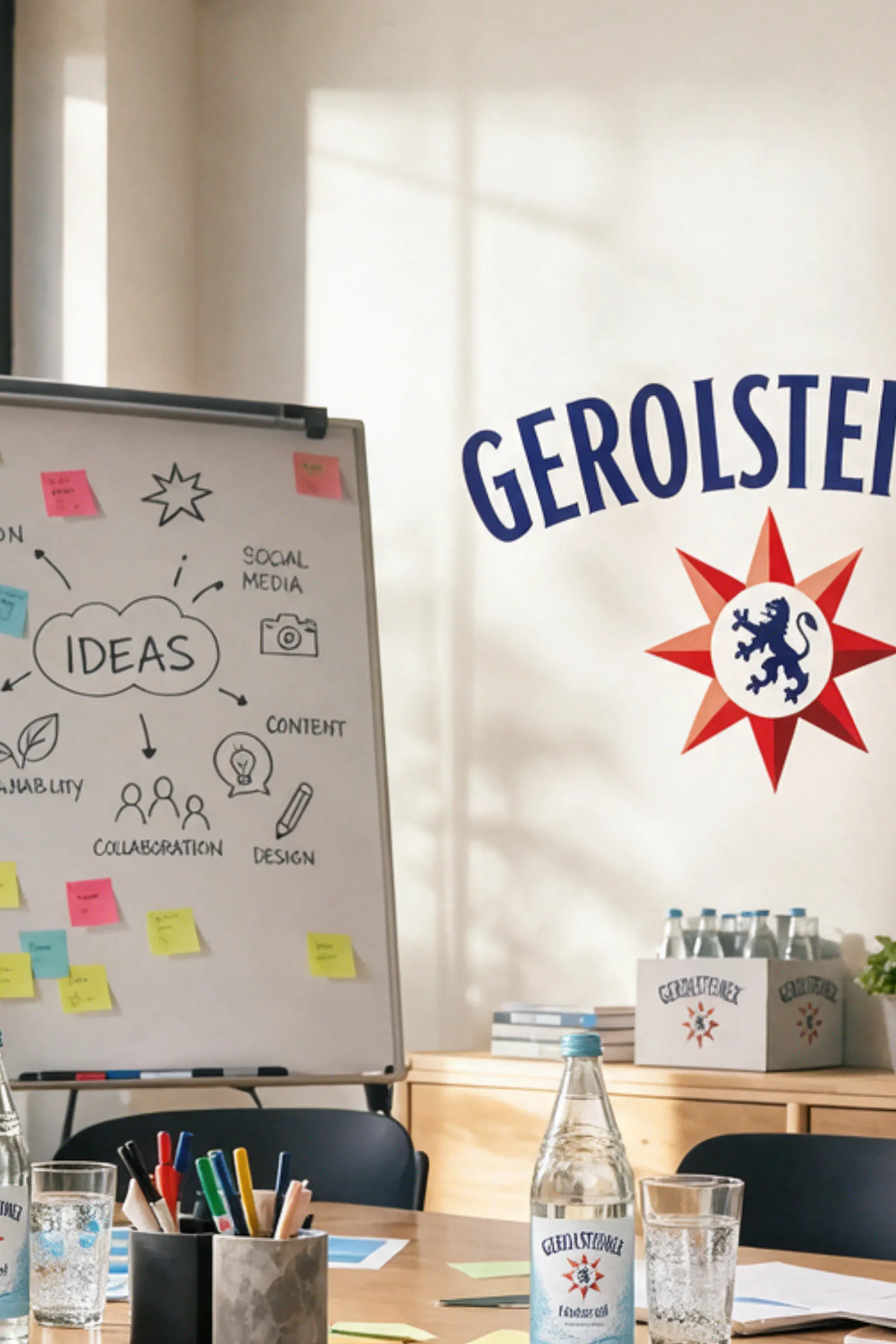
In mid-September we spent a day in Düsseldorf, in one room with every agency Gerolsteiner works with. Creative, media, social, POS – all at once, around the same table, working towards the same thing: ideas for a campaign launching next year.
That is more unusual than it sounds. Most brands work through their agencies in sequence. Creative first, then media, then, at some point, the technical side. Each one gets its slot, its briefing, its slice of the picture. Gerolsteiner deliberately did it differently, and the difference was noticeable within the first hour.
The thinking that carried the whole day
Right at the start, Gerolsteiner explained why everyone was in the room at the same time. In essence: we are bringing all of you together because we believe far more comes out of that than collecting individual ideas and projects from individual agencies, one at a time.
That sentence carried the entire day.
It is a remarkable position for a client to take, because it means giving up a degree of control. Put every one of your suppliers in a room at the same time and you can no longer manage who had which idea, who is positioning themselves, or who is loudest. You trade steerability for quality. Having sat through the day, I'd say the trade paid off.
We were the only ones without a campaign idea — and that was exactly right
A short confession: of all the ideas that came out of that day, almost none were ours. The concepts came from Gerolsteiner themselves and from the creative, media and social agencies in the room. We brought exactly one proposal of our own, a WhatsApp chatbot. Everything else we didn't invent — we listened to.
That isn't an admission of weakness. It's a description of the role.
We are a software agency. We don't develop campaign ideas, claims or visual concepts, because there are people who have been doing precisely that better than us for twenty years. What we can do is answer the question that comes after every good idea: and how do we actually build it?
That division of labour is often mistaken for competition. It is the opposite. A creative agency loses nothing by having an implementation partner at the table. It gains someone who will defend its ideas rather than quietly shrink them later.
Why implementation belongs in the room earlier
The usual sequence looks like this. Creative develops a concept, presents it, everyone is delighted. Weeks later it lands with the people who have to build it. And then one of two things happens. Either the idea is quietly cut back until it fits the budget and the timeline — and nobody notices how much of its original force is lost along the way. Or it gets built as designed, and the schedule and the costs come apart.
Both are avoidable. But only if someone is in the room at the moment the idea is formed.
That was the difference on the day. When an idea went up on the wall, we could say immediately what it meant technically: what was directly feasible, what would take time, where an interface would be needed, and at which point a small change to the concept would halve the effort without weakening the effect. Not three weeks later by email, but in the moment when an idea can still be shaped.
The fact that we originally built Gerolsteiner's website helped here. We didn't have to guess what the existing system could carry. For the agencies in the room, that meant something concrete: they got a reliable answer to their questions while they were still thinking — and didn't have to make their ideas smaller on suspicion.
That is the real value, and it has very little to do with code. It's that in a creative process, nobody is left relying on assumptions about what is possible.
What came out of it
After the Agency Day, we put together a proposal for Gerolsteiner on how the ideas from that day could be implemented digitally. Not our ideas — theirs. Translated into implementation concepts, with realistic effort estimates, technical routes and a clear view of what makes sense in which order.
That's the role that suits us. We don't walk into the room with an agenda of our own. We walk out with other people's ideas and make sure they get built the way they were meant.
What we took away from the day
For us, the Agency Day confirmed something we already suspected: the separation between creative and implementation is an organisational relic, not a professional necessity. It exists because processes grew that way historically, not because the work demands it.
When both sides work together early enough, three things happen. Ideas get more ambitious, because nobody is pre-emptively thinking smaller. Timelines get more honest, because the effort is known from the start. And the client gets what was presented to them, rather than a stripped-down version of it.
Gerolsteiner understood this earlier than most. Sometimes it really is worth stepping back and rethinking the process itself, instead of running through the old one ever faster.
What that collaboration looks like day to day, when we work as an extended workbench for an agency, is described in Technical Delivery Partner for Agencies.
Above all, the day showed us one thing: we would far rather work with creative agencies than against them. If you work at an agency and you have a concept where the question of technical implementation is still sitting there unanswered — that's exactly where we start. We're always happy to talk, with no designs on your side of the table.
Does yes!devs compete with creative agencies for budgets?
No. We don't develop campaigns, claims or visual worlds. Our work begins at the point where an idea exists and the question of technical implementation comes up. In projects like the Gerolsteiner Agency Day, the ideas come from the creative and media agencies — we make sure they get built the way they were intended.
When should a technical implementation partner be brought into a project?
As early as possible, ideally during the idea phase. If implementation only joins after concept sign-off, there are usually just two routes left: cut the concept back after the fact, or overrun the timeline and budget. When implementation is at the table from the start, ideas can be adjusted while they are still malleable.
Does yes!devs also work behind the scenes for agencies?
Yes. We work both directly for brands and as an implementation partner on behalf of agencies, depending on what makes more sense for the client relationship. Which arrangement is the right one is best worked out in conversation.